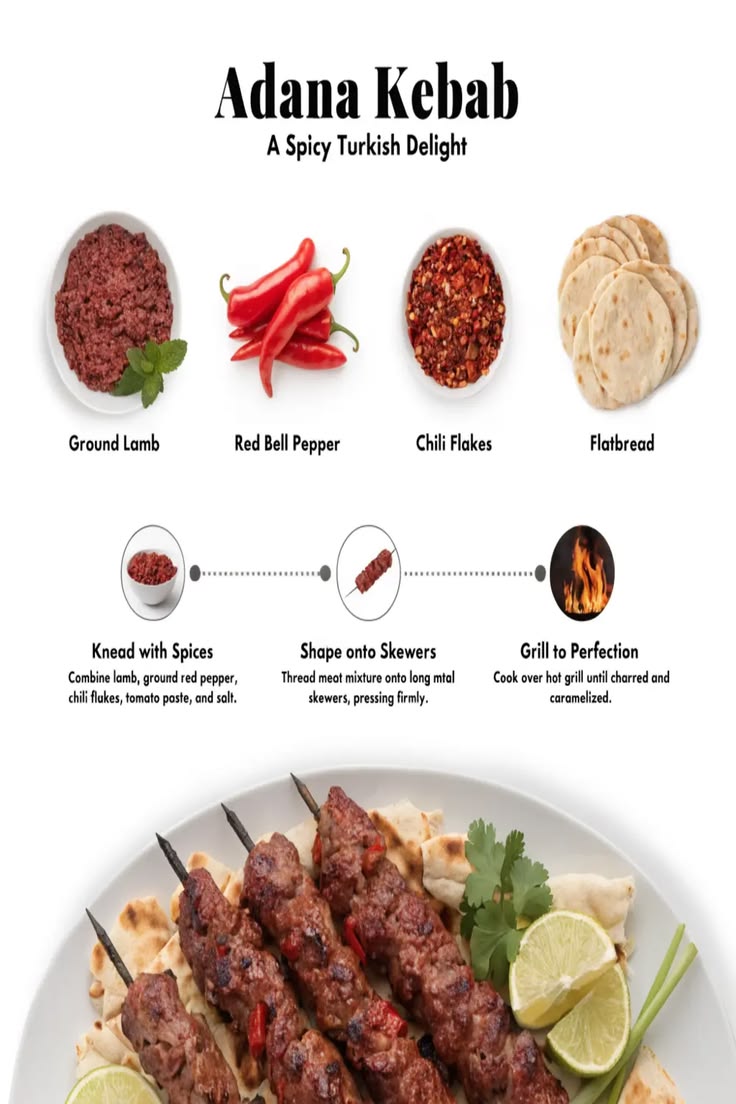
Adana Kebab: The Fiery Soul of Turkish Grilling
If there is one dish that defines the bold, sun-drenched flavors of southern Turkey, it is the Adana Kebab. Named after the babaskebabandgrill city of Adana, this isn’t just a meal; it’s a protected cultural icon. In Turkey, a “true” Adana kebab can only be made by vendors who have been authorized by the Adana Chamber of Commerce, ensuring that every bite respects a tradition that dates back centuries. It is a masterclass in how a few simple, high-quality ingredients can be transformed by fire into something legendary.
The Ingredients: Simplicity with a Kick
The magic of an Adana Kebab lies in its specific components. Unlike other Mediterranean kebabs that might use heavy herbs, Adana focuses on the marriage of meat and heat.
- Ground Lamb: Traditionally, this should be meat from a male lamb under one year old, hand-minced with a massive curved blade called a zırh. It must have a high fat content—often including “tail fat”—to ensure it stays succulent over the high heat of the grill.
- Red Bell Pepper & Chili Flakes: These provide the signature “spicy delight” mentioned in the image. The peppers are finely chopped and kneaded into the meat, while flakes of Pul Biber (Aleppo pepper) add a smoky, fruity heat that lingers on the palate without being overwhelming.
- The Flatbread: An Adana kebab is never served alone. It rests on a bed of warm, slightly charred flatbread (often lavaş), which acts as a sponge for the savory juices and melted fats dripping from the meat.
The Technique: Mastering the Long Skewer
Preparing an Adana kebab is a tactile art form. The process begins with kneading. The lamb is combined with the peppers, salt, and spices, worked by hand until the mixture becomes tacky and holds together perfectly.
Then comes the most challenging part: shaping. The meat is pressed onto long, wide, flat metal skewers. These skewers are essential; the flat surface prevents the heavy meat from spinning or falling off as it renders. A skilled ustas (master chef) uses their thumb and forefinger to create rhythmic indentations along the length of the meat, which helps it cook evenly and creates those beautiful charred ridges.
Grilling to Perfection: The Dance of the Mangal
The final stage is the Mangal—the traditional Turkish open-air charcoal grill. The skewers are placed over glowing oak charcoal. There are no flames; only intense, steady heat. As the lamb cooks, the fat melts and drips onto the coals, creating a fragrant smoke that perfumes the meat.
The kebab is done when it is charred on the outside but remains incredibly juicy on the inside. It is typically served with charred tomatoes and green peppers, a side of sumac-dusted red onions, and fresh parsley to cut through the richness.
A Taste of History
Whether you are eating it from a street stall in Adana or recreating it at home using this guide, the Adana Kebab is a testament to the power of traditional Turkish hospitality. It represents a culture that values the slow process of hand-mincing and the patience of the charcoal grill, proving that the best flavors are often the ones forged in fire.
Would you like to know the best spices to buy to make this authentic at home, or are you looking for restaurant recommendations that serve a traditional Adana Kebab?
Leave a Reply