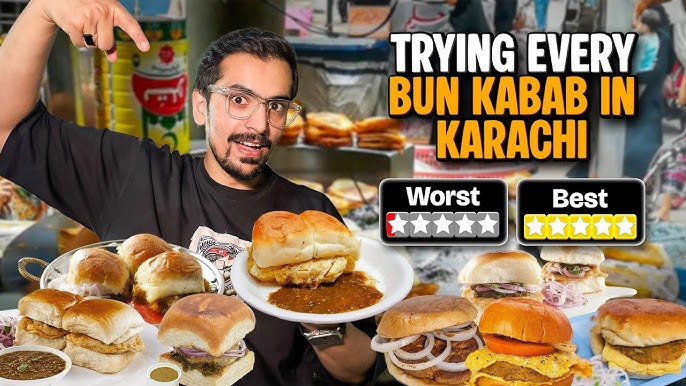
The Eternal Griddle: Why Karachi’s Bun Kebab Outlives Every Food Trend
The modern food landscape thrives on reinvention, yet the true soul of street food lies in its refusal to change. In the roaring, exhaust-filled air of Karachi, Pakistan, thousands of cast-iron griddles (tawas) sing a rhythmic song of sizzling oil and clattering metal spatulas. They are producing the bun kebab—a dish born in the mid-20th century that remains the undisputed, democratic champion of South Asian street culture. While global fast-food empires build sleek, air-conditioned storefronts nearby, the humble, roadside bun kebab stall continues to capture the hearts, late nights, and appetites of millions. It is a timeless culinary masterpiece that proves simple, localized flavors are built to last forever.
The Genesis of a Culinary Equalizer
The history of the bun kebab is deeply intertwined with the story of modern Pakistan. Following the partition of the subcontinent in 1947, Karachi kebabvalls.com became a melting pot of displaced communities, cultures, and culinary traditions. By the early 1950s, resourceful street vendors recognized the urgent need for a fast, filling, and incredibly cheap meal to sustain a rapidly growing urban workforce.
The brilliance of the bun kebab lay in its accessibility. In a region where meat was traditionally a luxury reserved for special occasions or wealthier households, vendors designed a masterfully spiced patty using chana dal (split chickpeas) and boiled potatoes. This humble lentil core was heavily infused with roasted cumin, whole dried red chilies, garlic, ginger, and a sharp dash of chaat masala. When pan-fried to a golden-brown crisp, this vegetarian creation offered the rich, savory satisfaction of meat at a fraction of the cost. It became an instant equalizer—a dish eagerly grabbed by day laborers, university students, and wealthy elites sitting side-by-side in plastic chairs on the sidewalk.
The Anatomy of Textural Perfection
What transforms a bun kebab from a mere sandwich into a sensory experience is its highly specific assembly line process. Everything revolves around the tawa, a massive, shallow iron pan with a deep well in the center and a wide, raised brim. The outer rim holds pre-cooked patties and warming buns, while the hot center acts as the stage for final assembly.
The absolute signature of an authentic bun kebab is the anda (egg) wash. Vendors do not merely crack an egg onto the grill. Instead, they separate the whites and beat them vigorously by hand in deep metal bowls until they form a dense, snow-white foam. The lentil patty is dipped into this frothy cloud and dropped into shimmering ghee or butter. As it cooks, the egg expands outward, creating a beautiful, lacy, web-like jacket that wraps entirely around the core.
While the patty sizzles, a soft, round bakery bun is sliced open and tossed onto the greased iron to toast until the edges are golden and slightly crispy. Then comes the crucial layering of contrast. The bottom bun receives a generous swipe of fiery green chutney made from pulverized fresh mint, cilantro, and green chilies. The egg-wrapped patty is laid on top, followed by a sweet, sour, and intensely sticky tamarind (imli) sauce. Finally, a heavy handful of raw red onion rings—soaked in ice water to remove their harsh bitterness while retaining maximum crunch—is piled on before the top bun is slammed shut.
Resisting the Corporate Influx
In the late 1990s and 2000s, the landscape faced a massive shift as Western fast-food franchises aggressively expanded across Pakistan’s major metropolitan areas. For a brief moment, food critics wondered if the humble roadside stand would be wiped out by the status and clean consistency of corporate burgers.
Instead, a fascinating cultural counter-revolution occurred. The corporate influx triggered a wave of deep culinary nostalgia. People quickly realized that while a franchise burger offered predictability, it lacked the complex, tangy, and deeply satisfying flavor profile that only a well-seasoned street tawa could provide. In an ironic twist of fate, global fast-food brands eventually capitulated to the trend, adding their own mass-produced interpretations of the “Anday Wala Burger” to local menus. Yet, these corporate versions could never truly replicate the character, smoke, and soul of the street corner.
Modern Global Renaissance
Today, the bun kebab is experiencing an exciting global evolution. As a new generation of Pakistani diaspora chefs establishes themselves in global culinary capitals like New York, London, Toronto, and Chicago, they are bringing their childhood food memories with them. The bun kebab is no longer restricted to South Asian neighborhoods; it is popping up on trendy pop-up menus and food trucks worldwide, celebrated by international food critics for its sophisticated balance of heat, acid, and texture.
Whether enjoyed at a high-end diaspora restaurant abroad or standing on a bustling sidewalk in its native Karachi, the bun kebab remains a timeless triumph of street gastronomy. It is a dish that honors its past while effortlessly staying relevant in the present, securing its spot as a true, permanent icon of world comfort food.
Leave a Reply